

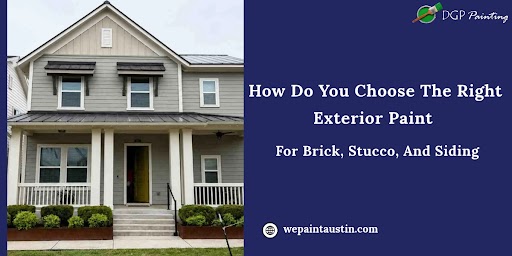
Choosing the right finish for your property’s exterior starts with understanding the surface, climate, and maintenance needs. Experienced exterior house painters Austin can help you compare paint types, finishes, and colors for lasting results.
Exterior paint does more than improve curb appeal. It helps protect your home from moisture, sunlight, and everyday weather exposure. However, brick, stucco, and siding have different surface properties, so one paint product may not work equally well on all three.
In Austin, Texas, hot summers, strong sunlight, humidity, and occasional heavy rain make product selection particularly important. The right choice depends on the material’s condition, whether it has been painted before, and the protection it needs. Understanding these factors can help you make a confident decision before starting your next exterior painting project.
What Should You Know Before Choosing Exterior Paint?
Before comparing paint products, identify your exterior material and inspect its condition. Even two homes with the same siding material may need different preparation methods or coatings.
Consider these factors:
- Surface material: Brick, stucco, wood, and fiber cement have different levels of porosity and moisture sensitivity.
- Existing finish: Previously painted surfaces may need cleaning, scraping, sanding, or a compatible primer.
- Weather exposure: Walls that receive direct afternoon sunlight may experience greater heat and UV exposure.
- Moisture conditions: Cracks, leaks, damaged caulking, and drainage problems should be addressed before painting.
- Maintenance needs: Some finishes show dirt more readily, while others may require more frequent cleaning or touch-ups.
“Quality paint matters, but proper surface preparation and choosing a compatible product are equally important.”
What Is The Best Exterior Paint for Brick?
Brick is durable, but its porous surface can absorb moisture. If you want to paint brick, choose a high-quality masonry paint designed for the specific brick surface and exposure conditions.
Look for these features:
- Breathability: The coating should allow moisture vapor to escape where the masonry system requires it. Trapping moisture can contribute to peeling and masonry damage.
- Strong adhesion: Choose a product formulated for masonry to ensure proper adhesion to the surface.
- Weather resistance: A suitable exterior coating should withstand sunlight, rain, and temperature changes.
- Compatible primer: Bare or previously painted brick may require a specific masonry primer, depending on its condition and the selected paint.
Before painting, inspect the brick and mortar for cracks, crumbling, or signs of trapped moisture. Address these problems first. Also, avoid painting historic brick without understanding how the coating could affect the masonry.
How Should You Choose Exterior Paint For Stucco?
Stucco has a textured surface that can develop hairline cracks over time. Its rough finish also makes even paint coverage more challenging.
Should you use acrylic or elastomeric paint on stucco?
Both can be suitable, depending on the surface and its condition.
- Acrylic exterior paint: Offers good color retention and weather resistance when formulated for stucco. It can be a practical choice for sound surfaces.
- Elastomeric coating: Creates a thicker, flexible film that can bridge certain small, nonstructural cracks when applied according to the manufacturer’s instructions.
However, elastomeric paint is not the right solution for every stucco wall. Applying a thick coating to a damp or unsuitable surface may create problems. Structural cracks and moisture intrusion need proper attention before painting.
What Exterior Paint Works Best For Siding?
The right paint for siding depends on whether your home has wood, fiber cement, engineered wood, or another material. Always check the siding manufacturer’s painting recommendations.
How do you select paint For Different siding materials?
- Wood siding: Choose a quality exterior paint suitable for wood. Proper priming, especially on bare wood and repairs, helps support adhesion and protect the surface.
- Fiber cement siding: Use a compatible exterior acrylic or other manufacturer-approved coating. Follow the product instructions for preparation and application.
- Engineered wood siding: Check the manufacturer’s requirements for primer, finish paint, and exposed edges.
- Previously painted siding: Remove loose or failing paint, prepare the surface, and apply primer where needed.
If you’re comparing home painters Austin TX, ask how they plan to prepare your particular siding material. The preparation process can make a major difference in how well the new finish performs.
How Do You Choose the Right Exterior Paint Color and Finish?
Once you have selected a suitable paint type, consider its color and sheen.
- Light colors: These can give your home a bright appearance and may absorb less solar heat than darker colors.
- Dark colors: These create a bold look but can become hotter in direct sunlight. Check whether the siding manufacturer permits your chosen color.
- Flat or matte finishes: These can soften the appearance of textured masonry, although cleaning performance varies by product.
- Satin or low-sheen finishes: These may offer a balance between appearance and cleanability on suitable siding surfaces.
Test a few samples on different sides of your home. Observe them in morning sunlight, afternoon shade, and overcast conditions before making your final decision.
When Should You Hire Professional Exterior Painters?
DIY painting may suit smaller projects, but large exterior surfaces, extensive preparation, and difficult-to-reach areas can require professional help.
When comparing exterior painting companies near me, look beyond the initial quote. Ask whether the estimate includes surface repairs, cleaning, primer, the number of coats, and cleanup.
For commercial properties, experienced contractors can also help plan exterior commercial painting around building access and business operations. If the property needs a fresh appearance rather than a complete renovation, ask about commercial repaints and the preparation they require.
DGP Painting provides residential and commercial painting services in Austin, with a focus on thorough preparation and quality finishes. So, contact DGP Painting today to request an exterior painting estimate.
Ready to Protect Your Home Investment?
DGP Painting provides residential and commercial painting services in Austin with a focus on thorough preparation and quality finishes. Contact us today to request an exterior painting estimate.
Frequently Asked Questions
Can you use the same exterior paint on brick, stucco, and siding?
How many coats of exterior paint does a house need?
Many projects require a primer where appropriate and two finish coats. However, the exact requirements depend on the paint manufacturer’s instructions, the existing surface, and the product selected.
When is the best time for residential painting in Austin?
Spring and fall often offer more comfortable painting conditions. However, the correct application temperature, humidity, and weather window depend on the product. Follow its label and allow adequate drying time.
Should you repair cracks before exterior painting?
Yes. Repair suitable cracks and address their underlying causes before painting. Structural cracks and signs of water intrusion may require professional assessment.
How do you find reliable exterior house painters in Austin?
When comparing exterior painting companies near me, check recent project photos, customer reviews, written estimates, preparation procedures, and workmanship warranties. Make sure the contractor explains which products suit your exterior material.
Choosing the right exterior paint starts with understanding your property’s surface and condition. With suitable products, careful preparation, and professional application when needed, you can improve curb appeal while helping protect your home’s exterior.
